Episode 30: The Doors Which Language Opens and Closes

If you talk to a man in a language he understands, that goes to his head. If you talk to him in his own language, that goes to his heart.
— Nelson Mandela
You can never understand one language until you understand at least two.
— Geoffrey Willans
Never make fun of someone who speaks broken English. It means they know another language.
— H. Jackson Brown Jr.

Alex Urist joins us in this episode to discuss his thoughts on language and how it affects our opportunities in life. In particular, we focus on his experiences with China, dialects of the country and his memories of street cuisine and other related stories. We also speak about the best ways to engage with a language and why everyone should pursue skills in multiple languages.

China: A guide to the best street food

China: A guide to the best street food

Shanghai Street Food

Shanghai Street Food

酱爆茄子 or Eggplant

酱爆茄子 or Eggplant

WOW Barbecue

WOW Barbecue

北京烤鸭 or Duck

北京烤鸭 or Duck

Xiaolongbao or steamed bun

Xiaolongbao or steamed bun

酸辣土豆丝 or Potatoes

酸辣土豆丝 or Potatoes

Episode 29: The Microsoft HoloLens and Augmented Reality

By most accounts, Microsoft has created a technology that blends the real and the virtual into a helpful hybrid by overlaying a screen on what we see. I just wonder if more screen time is what we really need.
— David Carr of The New York Times
The Hololens is pretty amazing. Microsoft has put a lot into the chips and the software. It is the start of virtual reality. Making the device so you don’t get dizzy or nauseous is really hard — the speed of the alignment has to be super super fast. It will take a few years of software applications being built to realize the full promise of this.
— Bill Gates

In this episode, we offer an introduction of sorts to Microsoft's latest creation, the HoloLens. First announced on January 21, 2015, the HoloLens is described by Microsoft as a utility which brings "high-definition holograms to life in your world, where they integrate with your physical places, spaces and things". We discuss how the HoloLens integrates long-standing practices of socializing and recording information. We also consider policing and regulation of new virtual and augmented reality technologies. Finally, we examine future uses for the device, including educational possibilities, as well as the dangers of the technology and its effect on our perceptions of reality.

Episode 28: Strangely Like War

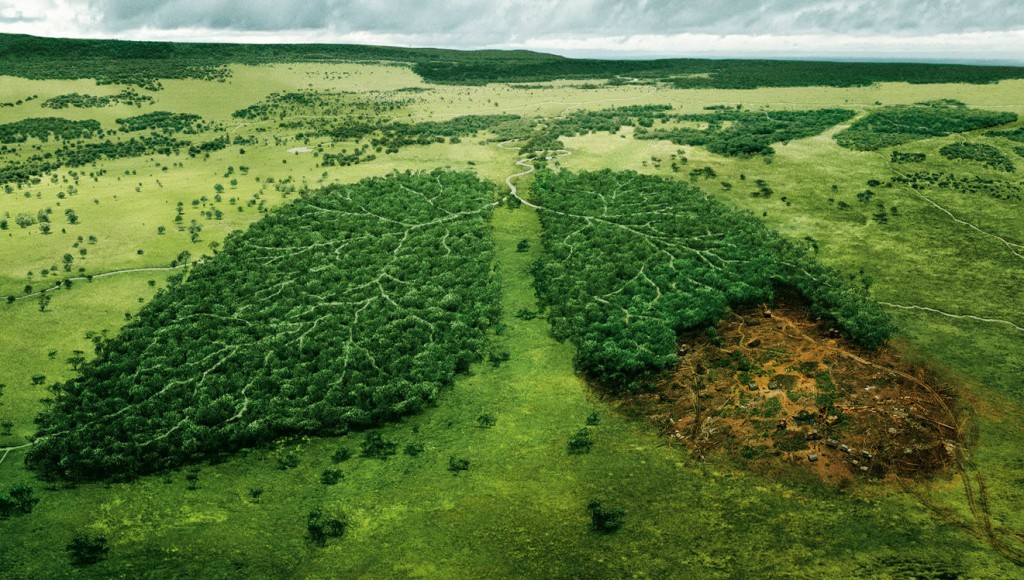
A nation that destroys its soils destroys itself. Forests are the lungs of our land, purifying the air and giving fresh strength to our people.
— Franklin D. Roosevelt
Trees, how many of ‘em do we need to look at?
— Ronald Reagan

In this episode, Hector gives a reading from Strangely Like War: The Global Assault on Forests by Derrick Jensen and George Draffan. He reads from Chapter 1, "Deforestation" and Chapter 2, "Forest Dwellers". We discuss human impacts on global forests, our various relationships with nature and how different cultures respond to and appreciate our environment.

Episode 27: Storytelling and Comedy

After nourishment, shelter and companionship, stories are the thing we need most in the world.
— Philip Pullman
There is a thin line that separates laughter and pain, comedy and tragedy, humor and hurt.
— Erma Bombeck

In this episode, we welcome guest Mike Jest to discuss how comedy and storytelling often work in conjunction with one another. We examine some of the basic forms of comedy, as well as the structure of several sitcoms. We also discuss variations on interweaving story-lines and some of the fundamental rules and tips in comedy. Finally, we look at comedy as a means of social and political satire.

Episode 26: Functions of Art

Creativity is allowing yourself to make mistakes. Art is knowing which ones to keep.
— Scott Adams
Art should comfort the disturbed and disturb the comfortable.
— Banksy
The arts are not a way to make a living. They are a very human way of making life more bearable. Practicing an art, no matter how well or badly, is a way to make your soul grow, for heaven’s sake. Sing in the shower. Dance to the radio. Tell stories. Write a poem to a friend, even a lousy poem. Do it as well as you possible can. You will get an enormous reward. You will have created something.”
― Kurt Vonnegut, A Man Without a Country

In this episode, we reflect on art as a human product, and the effects it has on us. We discuss the intentions of artists as well as the uses art has found historically and politically.