Episode 50: The Haka and Cultural Appropriation

The All Blacks perform two haka: the traditional Ka Mate dating back to the earliest All Blacks tours in the 1900s, and Kapa o Pango, first performed in 2005 and written especially for the All Blacks. It is Kapa o Pango that contains the violent motion Sheehan objects to: a throat-slitting motion at the end.

Both haka in fact have benign origins. Although haka are best known as war dances, they have many uses in Maori culture, including to welcome distinguished guests and to acknowledge significant occasions. Ka Mate has an extensive folk tradition in centuries of Maori culture, typically used as a peace-making song or a rallying cry.
— André Brett of The Conversation

In an increasingly global world, we are constantly exposed to new cultures, ideas and perspectives, many of which originate in remote spaces and times. As such, we often risk losing their original meanings and purposes. As peoples encounter new cultures, they often adopt and adapt foreign practices for different functions. This week, we welcome back Joe Walsh to discuss the phenomenon of cultural appropriation as it pertains to the indigenous Maori people of New Zealand and the All Blacks rugby team.

Episode 49: Interstellar

When you approach a black hole, the black hole is distorting space in its vicinity, and this was captured beautifully. I enjoyed watching the surrounding imagery get distorted. … It’s a sophisticated ray-tracing problem, and if you’re a movie producer and you can get it right, then why not?… At the time of ‘2001,’ the mathematical formulation of black holes was not fully explored, so all they could do was play with the space and time dimension without being anchored to actual gravitational physics.
— Neil deGrasse Tyson
As a filmmaker, you know, no matter how positive things seem, you always notice the bad reviews, you always notice that the things people love are the same things other people hate, so you can’t react to that. To me, it’s all about doing what you believe in.
— Christopher Nolan in an interview with the Hollywood Reporter, January 3, 2015

One of Kip's favorite films of 2014, Interstellar, was both highly anticipated and received with various reviews. Some loved it, others found it confusing, drawn-out and illogical. And while some see it as a science fiction film, its themes deal largely with the most innate levels of humanity, our fears and our hopes. It is as much about love, solitude and exploration as it is about space travel. We welcome back Kyle Aaronson to discuss his take as well as the highs and lows of the film.

Episode 48: Speaking Body Language

It is really hard to completely re-learn how to express yourself without using words. When you take away speech, you have to re-invent the way you express yourself. You have to exaggerate your body language and your facial expressions.
— Jodelle Ferland
We’re losing social skills, the human interaction skills, how to read a person’s mood, to read their body language, how to be patient until the moment is right to make or press a point. Too much exclusive use of electronic information dehumanizes what is a very, very important part of community life and living together.
— Vincent Nichols

While most people would point to verbal languages as the focal point of most human communication, the expressive power of the human body (and those of many animals!) cannot be denied. Increasingly, psychologists and other social scientists believe body language holds substantial attention and weight in social interaction. Because of the relevance and interest in the topic, we were happy to welcome Edgar Arceo this week to discuss some of these phenomena with us.

Episode 47: The World of Online Relationships

Above all, Internet dating has helped people of all ages realize that there’s no need to settle for a mediocre relationship.
— Mark Brooks, consultant to online-dating companies, 2011
Let’s be real, there’s nothing wrong in a distant relationship that is honest but we must live in a realistic fact that phone calls are cool, texts are alright, tweets are chill, a Facebook message is okay, but nothing...I mean nothing beats seeing someone in person!
— Kemmy Nola
The market is hugely more efficient … People expect to—and this will be increasingly the case over time—access people anywhere, anytime, based on complex search requests … Such a feeling of access affects our pursuit of love … the whole world (versus, say, the city we live in) will, increasingly, feel like the market for our partner(s). Our pickiness will probably increase.
— Mark Brooks, consultant to online-dating companies, 2011

We're very happy to welcome Phoebe Lewis this week to discuss the nature of online relationships in the modern age. Not restricted to digital tales of romance, we wanted to examine how people behave both online and in reality as it parallels happenings on the Internet. We share our experiences, anecdotes of academic studies and offer insight on how to best navigate the ever-expanding realm of cyber-socializing.

Episode 46: Considering Marriage in Our Lives

A successful marriage requires falling in love many times, always with the same person.
— Mignon McLaughlin
When marrying, ask yourself this question: Do you believe that you will be able to converse well with this person into your old age? Everything else in marriage is transitory.
— Friedrich Nietzsche
Don’t marry the person you think you can live with; marry only the individual you think you can’t live without.
— James Dobson

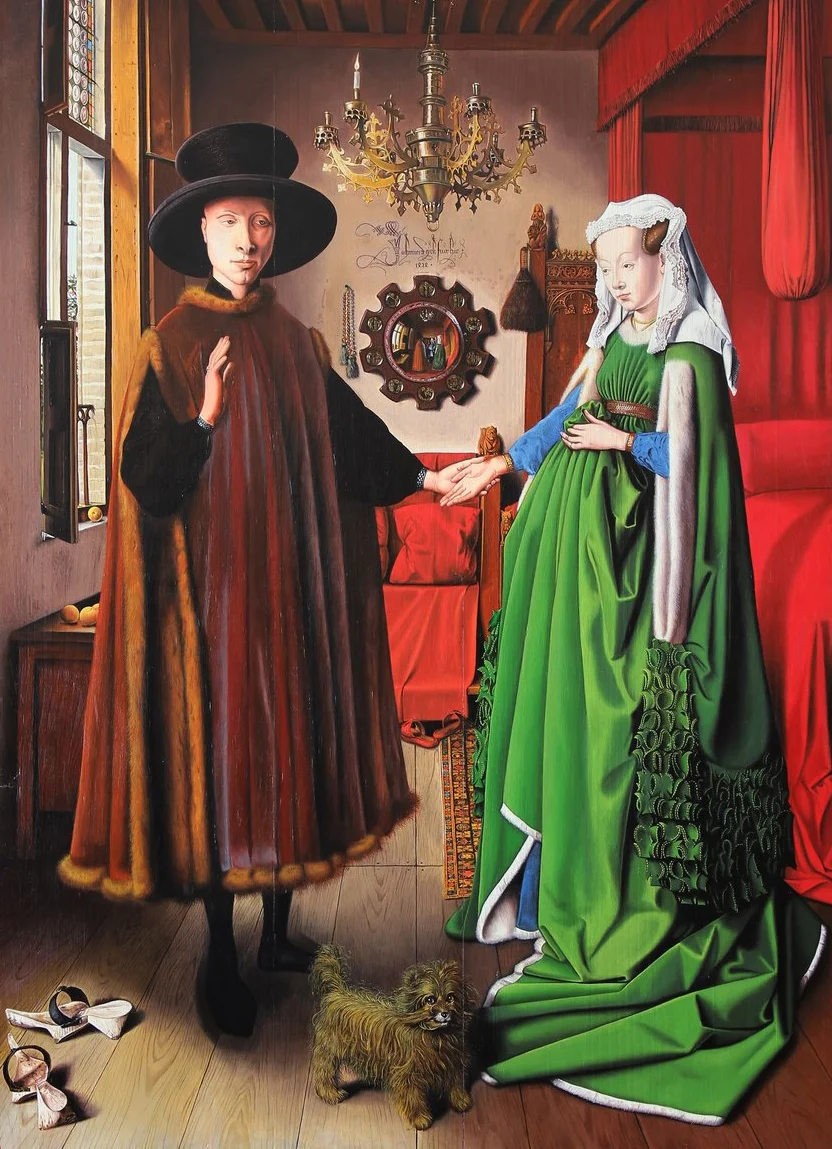
When we go about our daily lives, we often forget or gloss over the complex systems of relationships and individuals who lead us to be who we are. Marriage, like many other social concepts, binds families and couples the world over. Libby Gardner joins us this week to examine some of the reasons for which people get married and to discuss the option of marriage itself and why some may or may not choose to pursue it. 

*As an important amendment, this episode was recorded before the historic Supreme Court ruling on June 26, 2015 in favor of Marriage Equality.