Episode 73: The 2016 State of the Union

To imitate the hatred and violence of tyrants and murderers is the best way to take their place.
— Pope Francis to Pres. Barrack Obama
That’s the America I know. That’s the country we love. Clear-eyed. Big-hearted. Undaunted by challenge. Optimistic that unarmed truth and unconditional love will have the final word. That’s what makes me so hopeful about our future. I believe in change because I believe in you, the American people.
— Pres. Barrack Obama

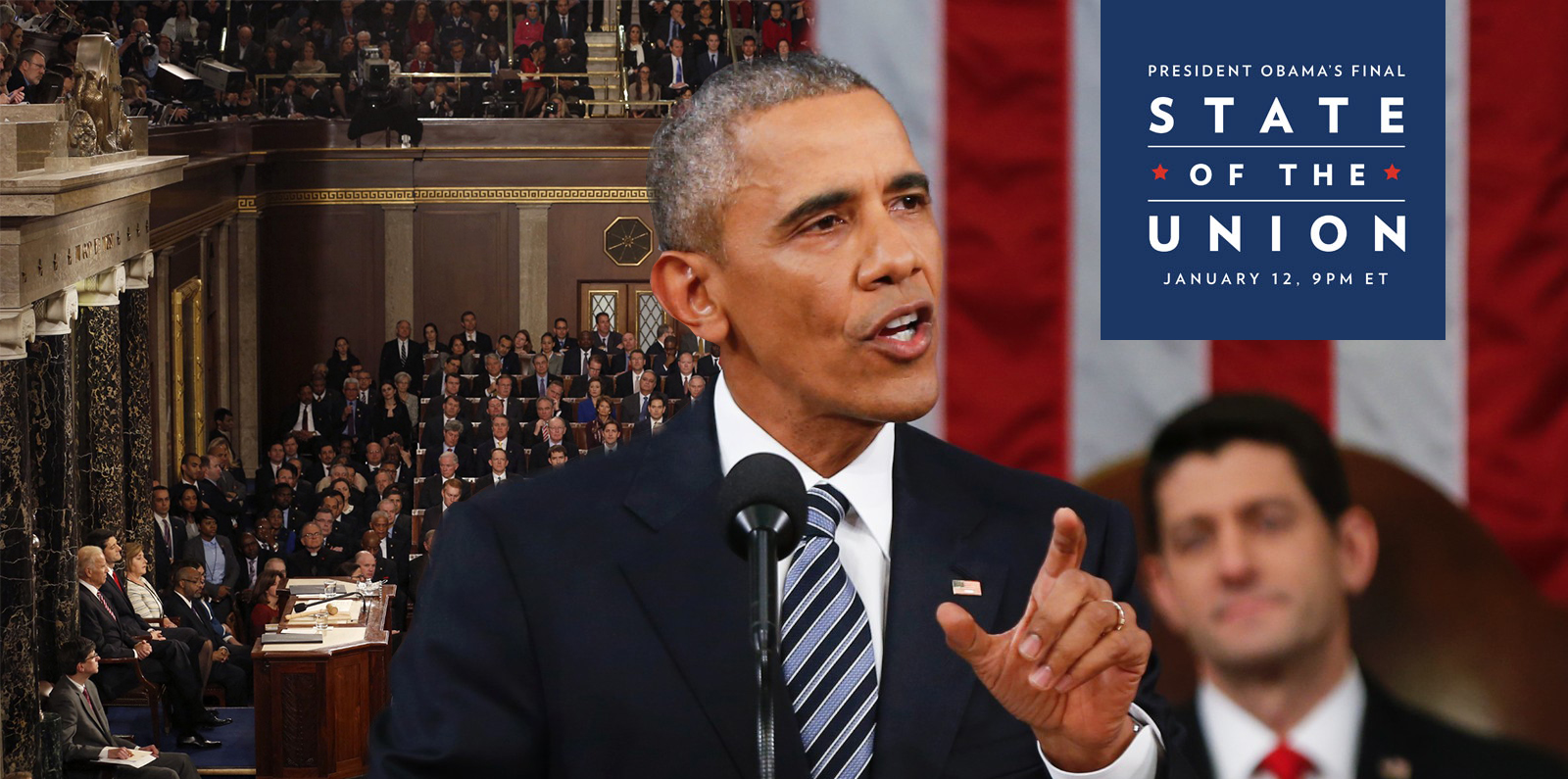
A country, like any larger system, group or society, should take the time to reflect on its growth, progress and flaws every so often. That is one of the principles behind the State of The Union Address. The American people (like those watching elsewhere) hear about the status of the country from the standing President. Our conversation this week focuses on the tone President Obama took, the attention he gave to certain issues, those he declined to discuss and the values behind his speech. It should be noted that we do not comment from a place of political expertise but rather social observation.

Episode 72: The Culture Surrounding Women in Comedy

I’ve said this before, that, when you’re in school and you’re the class clown, men are really good at making fun at other people and women are really good at making fun of themselves.
— Amy Poehler
I may sound like a megalomaniac, but I feel like I’m equipped to become a great, memorable comedian, if I keep working my ass off and staying at the pace I’m at, and I feel a responsibility to do that because of the women who have done it before me, and the ones who need to do it after me.
— Amy Schumer

While issues of gender take many forms in our society, some more nuanced than others, cultural bias and opinions are particularly evident in performative spaces and professions. This week we welcome Olivia Sanabria to discuss the relationship between female comedians and culture. What are our underlying expectations and pre-conceived notions of femininity and how do they relate to the societal commentary and entertainment found within comedy? How do confidence, personal voice and critical, resistant response relate to the field of comedy?

Episode 71: "What Are Your Plans After College?"

As seniors in college, many of us have to grapple with the predictable and agonizing questions about our post-graduate experiences, plans and goals. Although these conversations are invariably personal and rife with uncertainty and hesitation, we find ourselves frequently cornered nonetheless. This week, we welcome Yara Farahmand to explore the various dynamics within these questions, proper responses and how we might best juggle these inquiries for peace of mind and self-confidence.

Episode 70: "The End of Thirst"

According to the United Nations, 1.2 billion people already suffer from severe water shortages, and that number is expected to increase to 1.8 billion over the next decade, in part because of climate change.
— Sam Kean, "The End of Thirst", December 2015 issue of The Atlantic
Water recycling is a proven technology: California recycles hundreds of millions of gallons each day for irrigation and other uses. So what’s stopping recycled wastewater from going directly to our taps? Human psychology. The very idea of drinking it disgusts many people. They view such water as irredeemably dirty, little better than toilet water.
— Sam Kean, "The End of Thirst", December 2015 issue of The Atlantic

Although many of us may not think about it, water has always been and continues to be a precious resource for life on Earth - human and otherwise. As the global population has increased, however, supplies of fresh water have begun to dwindle. Various scientists, governments and communities around the world have started to think of solutions in response to the potential problem. This week, we react to an article in The Atlantic which deals with this issue. What are our preconceptions surrounding water and what ends would we consider pursuing for our own survival as a species? 

Episode 69: Whole Foods, Race and the Englewood Food Desert

The grocer, which has built its fortunes and reputation anchoring condo developments in wealthy enclaves, has never gone into a neighborhood like this. But last year, to the disbelief of many, the company announced plans to open a store in 2016 here, in one of Chicago’s most economically depressed neighborhoods.
— Emily Badger of "The Washington Post" on Whole Foods
We wanted to know, Whole Foods, are you going to hire people with records? We had been previously told that hands-down no, they aren’t going to hire anybody with records...Whole Foods really heard our concerns as a community and they are now coming up with a program to hire people with records at that store.
— Sonya Harper, Executive Director of Grow Greater Englewood.

While the distinctions between healthy and unhealthy food products are often evident to consumers, some communities lack the resources to acquire and store nutritious items. This week, we take a look at Englewood, a formerly thriving commercial suburb of Chicago whose prosperity in the 1930's has become a modern food desert in 2015. It is a predominantly black community of approximately 60,000 faced with poverty and high crime and unemployment. The grocery chain Whole Foods sees an opportunity and plans to open a branch in 2016. We thought it pertinent to discuss this complex relationship between food, opportunity and race in our discussion this week.

Episode 69.jpg