
Episode 32: Why We Study Film

Movies are not about the weekend that they’re released, and in the grand scheme of things, that’s probably the most unimportant time of a film’s life.
— Quentin Tarantino
A film is never really good unless the camera is an eye in the head of a poet.
— Orson Welles
A film is - or should be - more like music than like fiction. It should be a progression of moods and feelings. The theme, what’s behind the emotion, the meaning, all that comes later.
— Stanley Kubrick
Realism is a bad word. In a sense everything is realistic. I see no line between the imaginary and the real.
— Federico Fellini

This episode marks Hector's last as a permanent co-host on the show. As such, he wanted his final topic to pertain to his love of film. The following discussion (with guest Iggee Hu) encompasses film as a passion, a medium and a form of expression and communication. Both film majors offer their opinions on how to engage with film, what they personally enjoy about it and call attention to several finer details within film. We also discuss the unique approaches of a few directors as well as the impact of film on the masses.

Michelangelo Antonioni
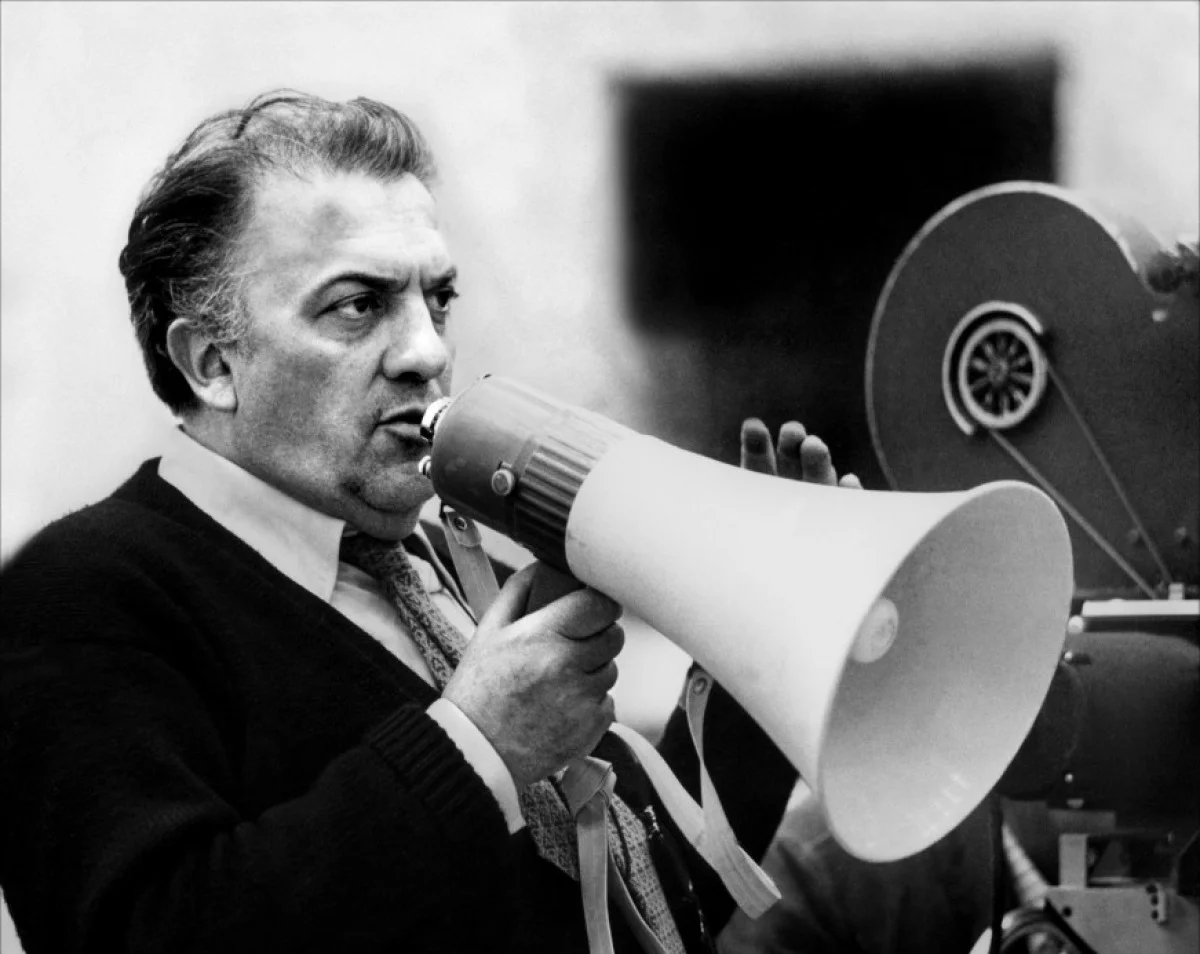
Michelangelo Antonioni

Federico Fellini

Federico Fellini

Episode 31: Violence in Video Games

One of the problems in this field is that people confuse aggression and violence. Some research will call sort of a competitiveness-type aggression as equivalent to violence in the real world. There is absolutely no evidence that any video game or violent movie for that matter has ever caused a real-world violent act.
— Cheryl Olson, Harvard Medical School
No one is suggesting that [violent video games are] the only reason they went out and committed those horrific acts, but was it a tipping point? Was it something that pushed them over the edge? Was it a factor in that? Perhaps. That’s a really big deal.
— Jim Steyer, Common Sense Media.

Often a source of criticism and concern, we wanted to discuss how violence in video games affects our opinions of their entertainment value. We also examine violence as it relates to American culture, what we are willing to tolerate or embrace and actions we do not tend to code as "violent" in nature.

Further Reading:

The Huffington Post, "Video Games Are Not to Blame for Mass Shootings"

NPR, "It's A Duel: How Do Violent Video Games Affect Kids?"

Psychology Today, "Can Video Games Cause Violence?"

WARNING: The video below contains highly graphic and disturbing imagery. Viewer discretion is advised.

Episode 30: The Doors Which Language Opens and Closes

If you talk to a man in a language he understands, that goes to his head. If you talk to him in his own language, that goes to his heart.
— Nelson Mandela
You can never understand one language until you understand at least two.
— Geoffrey Willans
Never make fun of someone who speaks broken English. It means they know another language.
— H. Jackson Brown Jr.

Alex Urist joins us in this episode to discuss his thoughts on language and how it affects our opportunities in life. In particular, we focus on his experiences with China, dialects of the country and his memories of street cuisine and other related stories. We also speak about the best ways to engage with a language and why everyone should pursue skills in multiple languages.

China: A guide to the best street food

China: A guide to the best street food

Shanghai Street Food

Shanghai Street Food

酱爆茄子 or Eggplant

酱爆茄子 or Eggplant

WOW Barbecue

WOW Barbecue

北京烤鸭 or Duck

北京烤鸭 or Duck

Xiaolongbao or steamed bun

Xiaolongbao or steamed bun

酸辣土豆丝 or Potatoes

酸辣土豆丝 or Potatoes

Episode 29: The Microsoft HoloLens and Augmented Reality

By most accounts, Microsoft has created a technology that blends the real and the virtual into a helpful hybrid by overlaying a screen on what we see. I just wonder if more screen time is what we really need.
— David Carr of The New York Times
The Hololens is pretty amazing. Microsoft has put a lot into the chips and the software. It is the start of virtual reality. Making the device so you don’t get dizzy or nauseous is really hard — the speed of the alignment has to be super super fast. It will take a few years of software applications being built to realize the full promise of this.
— Bill Gates

In this episode, we offer an introduction of sorts to Microsoft's latest creation, the HoloLens. First announced on January 21, 2015, the HoloLens is described by Microsoft as a utility which brings "high-definition holograms to life in your world, where they integrate with your physical places, spaces and things". We discuss how the HoloLens integrates long-standing practices of socializing and recording information. We also consider policing and regulation of new virtual and augmented reality technologies. Finally, we examine future uses for the device, including educational possibilities, as well as the dangers of the technology and its effect on our perceptions of reality.

Episode 28: Strangely Like War

A nation that destroys its soils destroys itself. Forests are the lungs of our land, purifying the air and giving fresh strength to our people.
— Franklin D. Roosevelt
Trees, how many of ‘em do we need to look at?
— Ronald Reagan

In this episode, Hector gives a reading from Strangely Like War: The Global Assault on Forests by Derrick Jensen and George Draffan. He reads from Chapter 1, "Deforestation" and Chapter 2, "Forest Dwellers". We discuss human impacts on global forests, our various relationships with nature and how different cultures respond to and appreciate our environment.